Best Strategies to Optimize for Generative AI Search in 2025
Master generative AI search optimization with proven strategies for ChatGPT, Claude, Perplexity, and Gemini. Learn advanced techniques to dominate AI-powered search results.
Best Strategies to Optimize for Generative AI Search
The Generative AI Search Landscape
Generative AI search represents a paradigm shift from traditional search engines. Instead of providing links, AI systems generate comprehensive, conversational answers by synthesizing information from multiple sources.
This guide reveals the most effective strategies to ensure your brand dominates these AI-generated responses.
Core Optimization Strategies for Generative AI
1. Entity-First Optimization
Build Strong Entity Recognition
Generative AI systems think in terms of entities (people, places, things, concepts) rather than keywords. Your optimization must focus on establishing your brand as a recognized entity.
Implementation Strategy:
- Create comprehensive “About” content
- Build entity relationships (founders, products, locations)
- Establish knowledge graph connections
- Maintain consistent entity attributes across the web
Entity Markup Example:
{
  "@context": "https://schema.org",
  "@type": "Corporation",
  "name": "Your Brand",
  "alternateName": ["Brand Nickname", "Brand Acronym"],
  "description": "Comprehensive brand description",
  "foundingDate": "2020",
  "founders": [{
    "@type": "Person",
    "name": "Founder Name"
  }],
  "knowsAbout": ["Expertise Area 1", "Expertise Area 2"],
  "memberOf": ["Industry Association 1", "Professional Organization 2"]
}
2. Semantic Content Architecture
Create Topic Clusters
Generative AI understands context through semantic relationships. Build comprehensive topic clusters that demonstrate expertise.
Topic Cluster Structure:
-
Pillar Page (3,000+ words)
- Comprehensive overview
- Links to all cluster content
- Covers broad topic thoroughly
-
Supporting Content (1,500+ words each)
- Specific subtopics
- Detailed explorations
- Links back to pillar
-
Related Resources
- FAQs
- Glossaries
- Case studies
- Tools and calculators
3. Natural Language Optimization (NLO)
Write for Conversation, Not Keywords
Generative AI excels at understanding natural language. Optimize for how people actually ask questions.
NLO Best Practices:
- Use complete sentences and paragraphs
- Include question-and-answer formats
- Write in active voice
- Provide context and examples
- Use transitional phrases
Example Transformation:
- ❌ Traditional: “Best restaurants NYC cheap”
- ✅ NLO: “What are the best affordable restaurants in New York City for families?“
4. Comprehensive Answer Framework
The COMPLETE Method
- Context: Provide background information
- Overview: Give a clear summary
- Multiple perspectives: Present various viewpoints
- Practical examples: Include real-world applications
- Limitations: Acknowledge constraints
- Expert insights: Add authoritative opinions
- Takeaways: Summarize key points
- Extra resources: Link to additional information
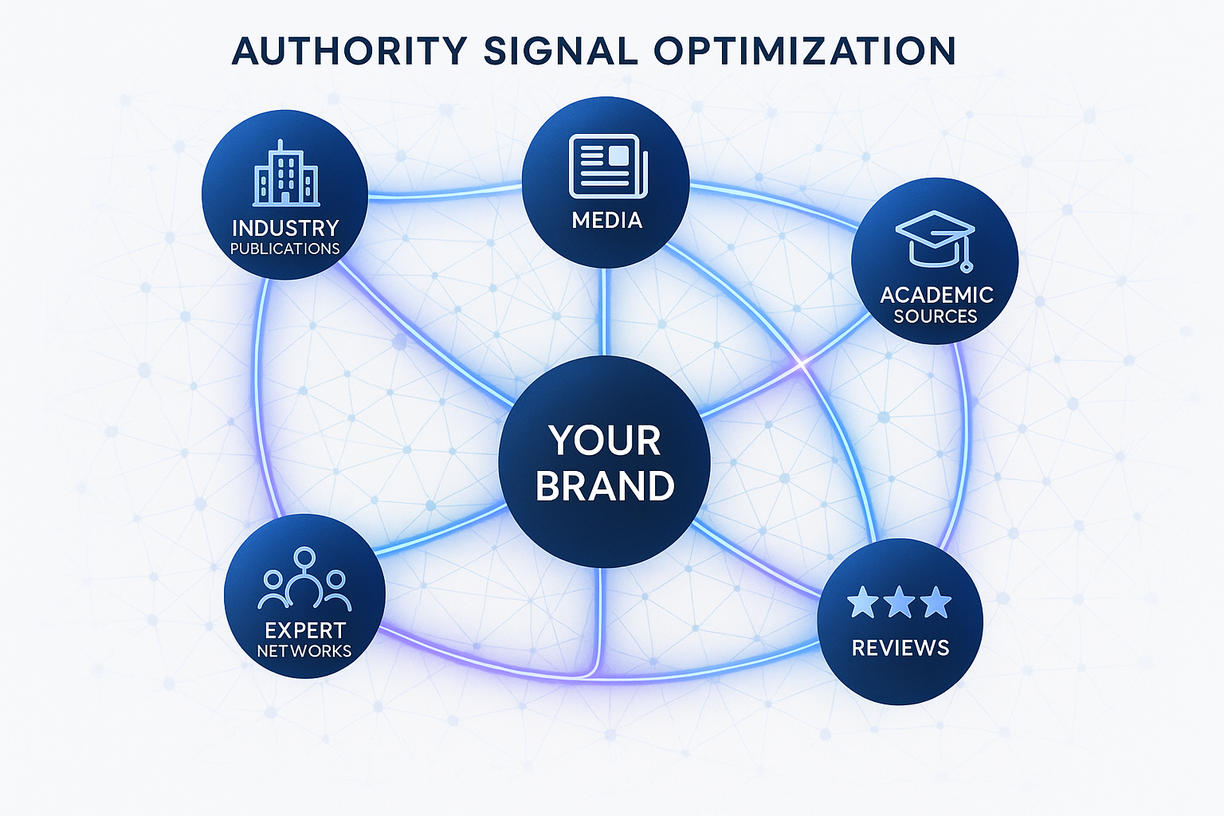
5. Authority and Expertise Signals
E-E-A-T for AI
Generative AI systems heavily weight expertise, experience, authoritativeness, and trustworthiness.
Building E-E-A-T:
-
Experience
- Share case studies
- Document years in business
- Showcase project portfolios
-
Expertise
- Highlight credentials
- Publish thought leadership
- Create educational content
-
Authoritativeness
- Earn quality backlinks
- Get media mentions
- Receive industry awards
-
Trustworthiness
- Display certifications
- Show customer reviews
- Maintain transparency
Platform-Specific Strategies
ChatGPT Optimization
Focus Areas:
- Educational, Wikipedia-style content
- Comprehensive topic coverage
- Clear, structured information
- Academic and professional tone
Content Strategy:
- Create detailed explanatory content
- Use formal, encyclopedic writing
- Include citations and references
- Structure with clear hierarchies
Claude Optimization
Focus Areas:
- Nuanced, thoughtful content
- Ethical considerations
- Safety and accuracy
- Detailed methodologies
Content Strategy:
- Emphasize responsible practices
- Provide balanced perspectives
- Include safety information
- Document processes thoroughly
Perplexity Optimization
Focus Areas:
- Real-time relevance
- Source credibility
- Recent updates
- Factual accuracy
Content Strategy:
- Maintain fresh content
- Update regularly
- Include timestamps
- Cite authoritative sources
Gemini Optimization
Focus Areas:
- Google ecosystem integration
- Multimedia content
- Local relevance
- Mobile optimization
Content Strategy:
- Optimize Google My Business
- Create YouTube content
- Use Google’s structured data
- Ensure mobile-first design
Advanced Optimization Techniques
1. Multi-Modal Content Strategy
Generative AI increasingly processes multiple content types:
Content Types to Create:
- Text: Comprehensive articles and guides
- Images: Infographics with alt text
- Videos: Transcribed video content
- Audio: Podcast transcripts
- Data: Tables and structured datasets
2. Contextual Relevance Optimization
Build Contextual Connections:
- Create content for different user intents
- Address various stages of customer journey
- Cover related topics comprehensively
- Link between related content pieces
3. Query Intent Mapping
Map Content to User Intents:
| Intent Type | Content Strategy | Format |
|---|---|---|
| Informational | Educational guides | How-to articles, tutorials |
| Navigational | Brand information | About pages, contact info |
| Commercial | Product comparisons | Reviews, feature lists |
| Transactional | Service details | Pricing, specifications |
4. Structured Data Implementation
Essential Schema Types:
<!-- FAQ Schema -->
<script type="application/ld+json">
{
  "@type": "FAQPage",
  "mainEntity": [{
    "@type": "Question",
    "name": "Your question here",
    "acceptedAnswer": {
      "@type": "Answer",
      "text": "Comprehensive answer"
    }
  }]
}
</script>

<!-- How-To Schema -->
<script type="application/ld+json">
{
  "@type": "HowTo",
  "name": "How to do something",
  "step": [{
    "@type": "HowToStep",
    "text": "Step description"
  }]
}
</script>
5. Citation and Reference Strategy
Build Citation Worthiness:
- Publish original research
- Create definitive guides
- Develop unique tools
- Share exclusive data
Citation Optimization:
- Use clear, citable statistics
- Include methodology details
- Provide downloadable resources
- Enable easy sharing
Content Creation Framework
The ANSWER Protocol
A - Anticipate Questions
- Research common queries
- Use AI tools to find gaps
- Monitor search trends
N - Nurture Comprehensiveness
- Cover topics thoroughly
- Address edge cases
- Include examples
S - Structure for Scanning
- Use headers effectively
- Include summaries
- Add tables of contents
W - Write Naturally
- Conversational tone
- Clear explanations
- Avoid keyword stuffing
E - Establish Authority
- Cite sources
- Include expertise
- Show credentials
R - Refresh Regularly
- Update statistics
- Add new information
- Revise outdated content
Measuring Success
Key Performance Indicators
-
AI Visibility Score
- Frequency of brand mentions
- Quality of recommendations
- Context appropriateness
-
Competitive Position
- Share of AI voice
- Ranking in lists
- Comparison mentions
-
Content Performance
- AI citation rate
- Information accuracy
- Sentiment quality
Testing Protocol
Weekly Testing Routine:
Monday: Test informational queries
Tuesday: Check competitive comparisons
Wednesday: Evaluate local searches
Thursday: Assess commercial intent
Friday: Review and document changes
Common Pitfalls to Avoid
Content Mistakes
- ❌ Thin, surface-level content
- ❌ Keyword stuffing
- ❌ Duplicate information
- ❌ Outdated statistics
- ❌ Biased or promotional tone
Technical Mistakes
- ❌ Poor site structure
- ❌ Slow loading times
- ❌ Mobile unfriendly
- ❌ Broken schema markup
- ❌ Missing meta descriptions
Strategic Mistakes
- ❌ Ignoring user intent
- ❌ Focusing on single platform
- ❌ Neglecting updates
- ❌ Insufficient depth
- ❌ Lack of originality
Implementation Roadmap
Phase 1: Foundation (Weeks 1-2)
- Conduct content audit
- Identify topic gaps
- Set up tracking
- Fix technical issues
Phase 2: Content Development (Weeks 3-6)
- Create pillar content
- Develop topic clusters
- Implement schema
- Build internal links
Phase 3: Authority Building (Weeks 7-10)
- Earn citations
- Generate backlinks
- Publish research
- Engage thought leadership
Phase 4: Optimization (Weeks 11-12)
- Test AI responses
- Refine content
- Update based on results
- Scale successful strategies
Future-Proofing Your Strategy
Emerging Trends
- Multimodal AI: Optimize for vision and voice
- Real-time AI: Focus on freshness
- Personalized AI: Create user-specific content
- Collaborative AI: Enable AI-to-AI communication
Preparation Strategies
- Build flexible content systems
- Invest in diverse content formats
- Maintain API-ready data
- Develop unique datasets
- Create interactive tools
Expert Tips for Success
From AI Optimization Specialists
- “Focus on depth over breadth” - Cover fewer topics more thoroughly
- “Think in conversations” - Write as if explaining to a friend
- “Data is king” - Provide unique statistics and research
- “Update or die” - Fresh content wins in AI search
- “Build topic authority” - Become the definitive source
Get Started Today
Ready to dominate generative AI search? BeFoundOnAI provides:
- AI Search Audits: Understand your current position
- Strategy Development: Custom optimization plans
- Content Creation: AI-optimized content writing
- Monitoring & Reporting: Track progress across platforms
Get Your Free AI Search Analysis
Take Action Now
The future of search is generative AI. Businesses optimizing today will dominate tomorrow’s AI-powered discovery landscape.
Immediate Action Steps:
- Audit your current AI visibility
- Identify content gaps
- Create one comprehensive guide
- Implement structured data
- Start tracking mentions
Start Your Generative AI Optimization
BeFoundOnAI is the premier generative AI search optimization platform. We help brands achieve dominant visibility across ChatGPT, Claude, Perplexity, and all emerging AI search platforms. Contact us to transform your AI search presence.