How to Optimize Content for AI Answers: Complete Optimization Guide
Master the art of content optimization for AI platforms. Learn proven techniques to ensure your content gets selected and cited by ChatGPT, Claude, and Perplexity.
How to Optimize Content for AI Answers
The New Content Paradigm
AI platforms don’t just read content—they understand, synthesize, and reconstruct it into answers. Optimizing for AI requires a fundamental shift from keyword-focused SEO writing to comprehensive, conversational content that AI systems can effectively process and cite.
Understanding How AI Processes Content
The AI Content Analysis Pipeline
graph LR
    A[Content Discovery] --> B[Natural Language Processing]
    B --> C[Entity Recognition]
    C --> D[Context Understanding]
    D --> E[Information Synthesis]
    E --> F[Answer Generation]
    F --> G[Source Attribution]
Key Processing Elements
- Semantic Understanding: AI analyzes meaning, not just words
- Contextual Relevance: Content must fit the query context
- Information Density: Comprehensive coverage preferred
- Structural Clarity: Logical organization essential
- Factual Accuracy: Verifiable information prioritized
The ANSWER Framework for AI Content
A - Anticipate User Intent
Query Analysis Strategy:
def optimize_for_intent(content):
    intents = {
        'informational': {
            'structure': 'definition → explanation → examples',
            'tone': 'educational',
            'depth': 'comprehensive'
        },
        'commercial': {
            'structure': 'problem → solution → benefits',
            'tone': 'persuasive yet balanced',
            'depth': 'detailed features'
        },
        'navigational': {
            'structure': 'overview → specifics → actions',
            'tone': 'direct',
            'depth': 'essential information'
        }
    }
    return align_content_with_intent(content, intents)
N - Natural Language Optimization
From Keywords to Conversations:
❌ Traditional SEO: “Best restaurant NYC cheap food Manhattan”
✅ AI-Optimized: “What are the best affordable restaurants in New York City that offer quality food without breaking the bank?”
Natural Language Techniques:
- Write complete sentences
- Use conversational tone
- Include question phrases
- Provide context naturally
- Connect ideas smoothly
S - Structure for AI Comprehension
Optimal Content Architecture:
# Main Topic [Clear, descriptive heading]

## Introduction [Context and overview]
Brief explanation of what this content covers and why it matters.

## Core Concept [Primary information]
### Subsection 1 [Specific aspect]
Detailed explanation with examples.

### Subsection 2 [Related aspect]
Additional information and context.

## Practical Application [How-to information]
Step-by-step guidance or implementation details.

## Common Questions [FAQ format]
### Question 1?
Direct, comprehensive answer.

### Question 2?
Clear explanation with examples.

## Summary [Key takeaways]
Bullet points of essential information.

## Additional Resources [Citations and links]
- Source 1: [Description]
- Source 2: [Description]
W - Write Comprehensively
Content Depth Guidelines:
| Content Type | Minimum Words | Optimal Words | Key Elements |
|---|---|---|---|
| Definition | 150 | 300 | Clear explanation, examples |
| Guide | 1,500 | 3,000 | Steps, visuals, tips |
| Comparison | 1,000 | 2,000 | Table, pros/cons, verdict |
| Tutorial | 2,000 | 4,000 | Prerequisites, steps, troubleshooting |
| Overview | 2,500 | 5,000 | History, current state, future |
E - Establish Expertise
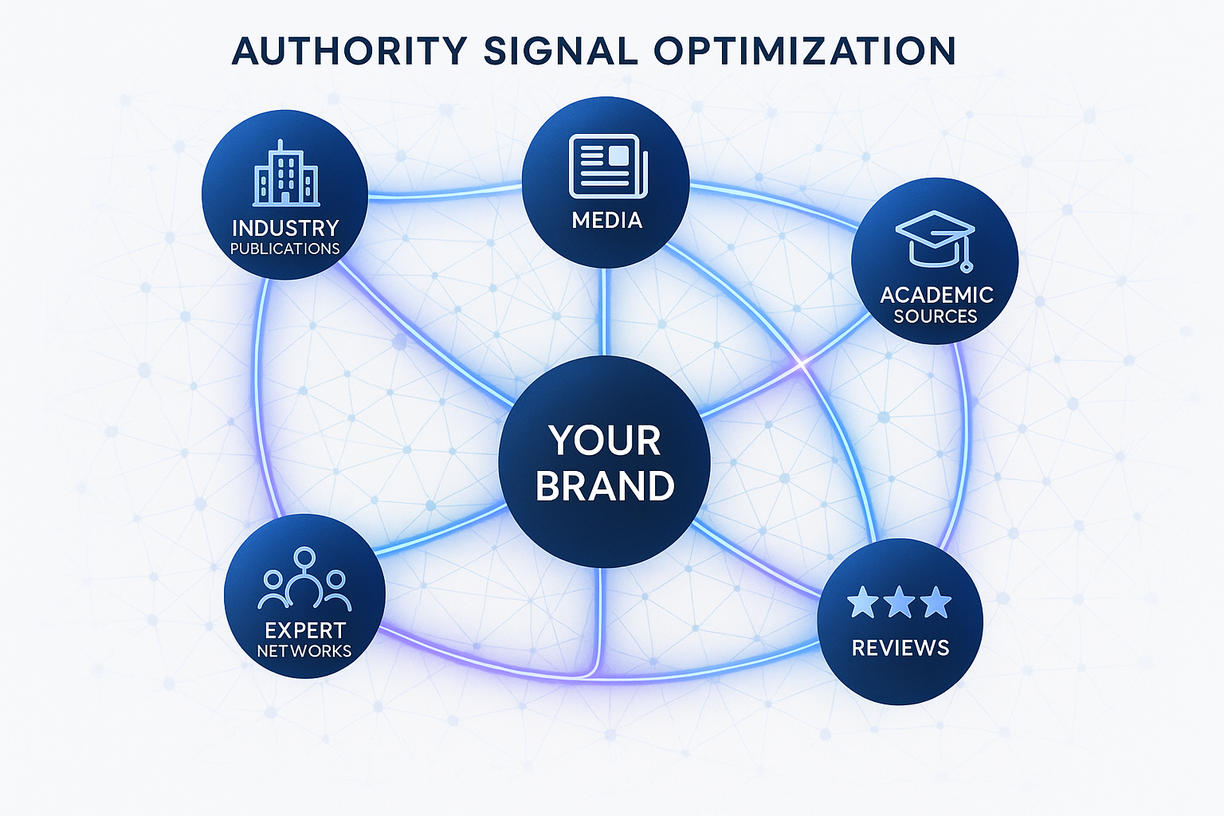
Authority Signals for AI:
<!-- Author Expertise Schema -->
<script type="application/ld+json">
{
  "@context": "https://schema.org",
  "@type": "Article",
  "author": {
    "@type": "Person",
    "name": "Dr. Jane Smith",
    "jobTitle": "Chief AI Strategist",
    "alumniOf": "MIT",
    "knowsAbout": ["AI", "Machine Learning", "NLP"],
    "sameAs": [
      "https://linkedin.com/in/drjanesmith",
      "https://scholar.google.com/drjanesmith"
    ]
  }
}
</script>
R - Reinforce with Rich Elements
Multi-Format Content Elements:
-
Text Elements
- Paragraphs for context
- Lists for clarity
- Tables for comparison
- Quotes for authority
-
Visual Elements
- Infographics with alt text
- Diagrams with descriptions
- Charts with data tables
- Screenshots with captions
-
Interactive Elements
- Calculators
- Quizzes
- Tools
- Demos
Platform-Specific Optimization
ChatGPT Content Optimization
Best Practices:
- Encyclopedia-style writing
- Academic tone
- Comprehensive coverage
- Neutral perspective
- Citation-worthy statistics
Example Opening: “Artificial Intelligence (AI) refers to the simulation of human intelligence in machines programmed to think and learn. Developed initially in the 1950s, AI has evolved from simple rule-based systems to complex neural networks capable of…”
Claude Content Optimization
Best Practices:
- Balanced viewpoints
- Ethical considerations
- Detailed explanations
- Safety information
- Nuanced perspectives
Example Structure: “While AI offers significant benefits including [benefits], it’s important to consider potential limitations such as [limitations]. Responsible implementation requires…”
Perplexity Content Optimization
Best Practices:
- Recent information
- Clear citations
- Scannable format
- Direct answers
- Updated timestamps
Example Format: “According to a 2025 study by MIT (source: mit.edu/ai-research), the latest developments in AI include… [Updated: January 2025]“
Gemini Content Optimization
Best Practices:
- Google-friendly structure
- Featured snippet optimization
- Local relevance
- Mobile formatting
- Quick answers
Example Structure: “Quick Answer: AI is… [40-60 word definition] Detailed Explanation: [Comprehensive information]“
Advanced Optimization Techniques
1. Entity Density Optimization
Calculate Optimal Entity Density:
def calculate_entity_density(content):
    entities = extract_entities(content)
    word_count = len(content.split())

    optimal_density = {
        'primary_entity': 2-3%,  # Main topic
        'related_entities': 1-2%,  # Supporting concepts
        'brand_entity': 0.5-1%  # Your brand
    }

    return optimize_density(entities, word_count, optimal_density)
2. Semantic Enrichment
LSI and Related Terms:
- Primary term: “AI optimization”
- Semantic variants: “artificial intelligence optimization”, “machine learning optimization”
- Related concepts: “neural networks”, “algorithm training”, “model performance”
- Context terms: “data processing”, “computational efficiency”, “accuracy improvement”
3. Question Targeting
Question Optimization Matrix:
| Question Type | Content Format | Answer Length | Structure |
|---|---|---|---|
| What is… | Definition | 150-300 words | Definition → Examples → Application |
| How to… | Tutorial | 500-1500 words | Steps → Tips → Common mistakes |
| Why does… | Explanation | 300-500 words | Cause → Effect → Significance |
| When should… | Guide | 400-600 words | Conditions → Timeline → Best practices |
| Which is better… | Comparison | 800-1200 words | Overview → Comparison → Recommendation |
4. Freshness Signals
Content Update Strategy:
const contentFreshnessStrategy = {
  statistics: 'Update monthly',
  examples: 'Refresh quarterly',
  core_information: 'Review semi-annually',
  timestamps: 'Add to all time-sensitive content',
  changelog: 'Document all updates'
};
Content Optimization Checklist
Pre-Publishing Checklist
Content Quality:
- Comprehensive topic coverage
- Natural, conversational language
- Clear structure with headers
- Factual accuracy verified
- Sources cited properly
- Examples included
- Questions answered
- Summary provided
Technical Optimization:
- Schema markup implemented
- Meta descriptions optimized
- Alt text for images
- Internal links added
- External citations included
- Mobile-friendly formatting
- Fast page load speed
- Timestamp included
AI-Specific Elements:
- Entity relationships clear
- Semantic variations included
- Question phrases integrated
- Comprehensive answers provided
- Authority signals present
- Update date visible
- Author expertise shown
- Balanced perspective maintained
Measuring Content Performance
AI Performance Metrics
class AIContentMetrics:
    def __init__(self, content_url):
        self.url = content_url

    def track_performance(self):
        metrics = {
            'ai_citation_rate': self.count_ai_citations(),
            'query_coverage': self.analyze_query_matches(),
            'sentiment_score': self.measure_ai_sentiment(),
            'competitive_position': self.compare_to_competitors(),
            'information_accuracy': self.verify_ai_responses()
        }
        return metrics

    def calculate_ai_content_score(self):
        # Weighted score calculation
        score = (
            self.citation_rate * 0.3 +
            self.query_coverage * 0.25 +
            self.sentiment_score * 0.2 +
            self.competitive_position * 0.15 +
            self.information_accuracy * 0.1
        )
        return score
Common Content Optimization Mistakes
Content Mistakes to Avoid
Writing Issues:
- ❌ Keyword stuffing instead of natural language
- ❌ Thin, surface-level content
- ❌ Promotional or biased tone
- ❌ Missing context and examples
- ❌ Poor structure and organization
Technical Issues:
- ❌ Missing schema markup
- ❌ No author information
- ❌ Lack of citations
- ❌ Outdated information
- ❌ Broken internal links
AI-Specific Issues:
- ❌ Ignoring conversational queries
- ❌ Missing entity relationships
- ❌ No question-answer format
- ❌ Incomplete topic coverage
- ❌ Lack of semantic variety
Content Optimization Workflow
Step-by-Step Process
Week 1: Research & Planning
- Analyze target queries
- Research user intent
- Study competitor content
- Map entity relationships
- Create content outline
Week 2: Content Creation
- Write comprehensive draft
- Add examples and data
- Include questions/answers
- Integrate entities naturally
- Add supporting elements
Week 3: Optimization
- Implement schema markup
- Add internal links
- Optimize structure
- Include citations
- Add timestamps
Week 4: Testing & Refinement
- Test AI responses
- Analyze performance
- Refine based on results
- Update and improve
- Monitor continuously
AI Content Optimization Tools
Essential Tools
Content Analysis:
- Semantic analysis tools
- Entity extraction software
- Readability analyzers
- Structure validators
Optimization Platforms:
- BeFoundOnAI Content Optimizer
- Schema markup generators
- Natural language processors
- AI testing frameworks
Future of AI Content Optimization
Emerging Trends
- Multimodal content optimization
- Real-time content adaptation
- Personalized content delivery
- Voice-first optimization
- Interactive content elements
Preparation Strategies
- Build flexible content systems
- Invest in comprehensive coverage
- Focus on user value
- Maintain content freshness
- Monitor AI evolution
Get Expert Content Optimization
BeFoundOnAI provides professional AI content optimization services:
- Content Audits: Analyze current AI performance
- Optimization Strategy: Custom content plans
- Content Creation: AI-optimized writing
- Performance Tracking: Monitor AI citations
Start Optimizing Today
Transform your content for AI success:
- Audit existing content
- Identify optimization opportunities
- Implement ANSWER framework
- Test AI responses
- Continuously improve
Explore Content Optimization Services
BeFoundOnAI specializes in content optimization for AI platforms, helping brands create content that gets cited and recommended. Contact us for expert guidance.